
Your Mental Basecamp: The 5 Steps to Wellbeing
“Not all mountains we climb are physical.”
The mission of Everyone’s Everest is to prove that no matter how daunting the challenge, the outdoors provides a way up. We’ve brought together the evidence-based NHS 5 Steps to Mental Wellbeing and the Baton of Hope’s ‘Five to Thrive’ to create a roadmap for your mental health.
Below are practical ways to take these principles out of the house and into the wild.
The Five Steps...

1. Connect
Spend time with those you trust
The Principle: Building strong relationships and talking openly is the ultimate safety line.
The Outdoor Exercise: The "Side-by-Side" Walk
-
Activity: Invite a friend, family member, or colleague for a walk. Practice the "Ask Twice" rule. When you ask "How are you?" and get the standard "I'm fine," ask again with genuine interest: "No, really—how are you doing lately?"
-
The Why: Research shows it’s often easier to talk about difficult things when walking side-by-side rather than sitting eye-to-eye.
2. Be Active
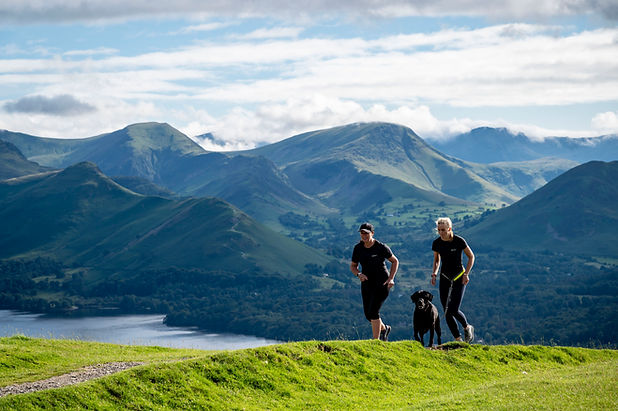
Move your body and get your heart pumping
The Principle: Movement changes your physiology, reducing stress hormones and clearing the "mental fog" of the climb.
The Outdoor Exercise: The 10-Minute Hill-Start
-
Activity: You don’t need to climb a mountain today. Find a local incline, a set of park stairs, or even a brisk loop around the block. Focus on the sensation of your feet hitting the ground. Every step is a literal move away from stagnation.
-
The Why: Physical effort releases endorphins that act as natural stress-fighters.

3. Take Notice
Pay attention to the present moment
The Principle: Mindfulness is the "base camp" of mental health—a place to pause and breathe.
The Outdoor Exercise: The 5-4-3-2-1 Sensory Hike
-
Activity: Stop for two minutes in a green space and identify:
-
5 things you can see (a specific leaf, a bird, a cloud shape).
-
4 things you can touch (bark, cold air on your face, the texture of your jacket).
-
3 things you can hear (wind, distant traffic, your own breath).
-
2 things you can smell (fresh rain, cut grass).
-
1 thing you can taste (or one positive thought about the moment).
-
-
The Why: Grounding your senses in nature silences mental noise and anchors you in the present—the only place where true resilience is built.
4. Keep Learning
Embrace a challenge
The Principle: New skills build self-esteem and give you a sense of purpose.
The Outdoor Exercise: The Navigator’s Mindset
-
Activity: Learn one small outdoor skill this week. It could be identifying three types of local trees, learning to read a compass, or mastering a new knot. Use an app like Seek or a guidebook to identify something living in your local park that you’ve never noticed before.
-
The Why: Mastering a small physical task in nature translates to a "can-do" attitude in your personal life.


5. Give
Do something nice for a friend or stranger
The Principle: Acts of kindness create a "wellbeing loop" that benefits both the giver and the receiver.
The Outdoor Exercise: The "Trail Steward" Walk
-
Activity: Take a small bag on your next walk and pick up three pieces of litter, or simply commit to making eye contact and smiling at everyone you pass on the trail.
-
The Why: Giving back to your environment or community fosters a sense of belonging and "hope-sharing" that is central to the Baton of Hope mission.
Resources
There are so many great organisations and charities out there championing and promoting the importance of using these steps in practical ways. Here are just a few that have a connection to us at Everyone's Everest:
